
Kingsley Mills
Antiques dealer.
Formerly.
Cynical, self-deprecating and brilliantly knowledgeable about art, provenance and people. Mills would usually rather be anywhere else.
Book one in the Mills & Morrison series
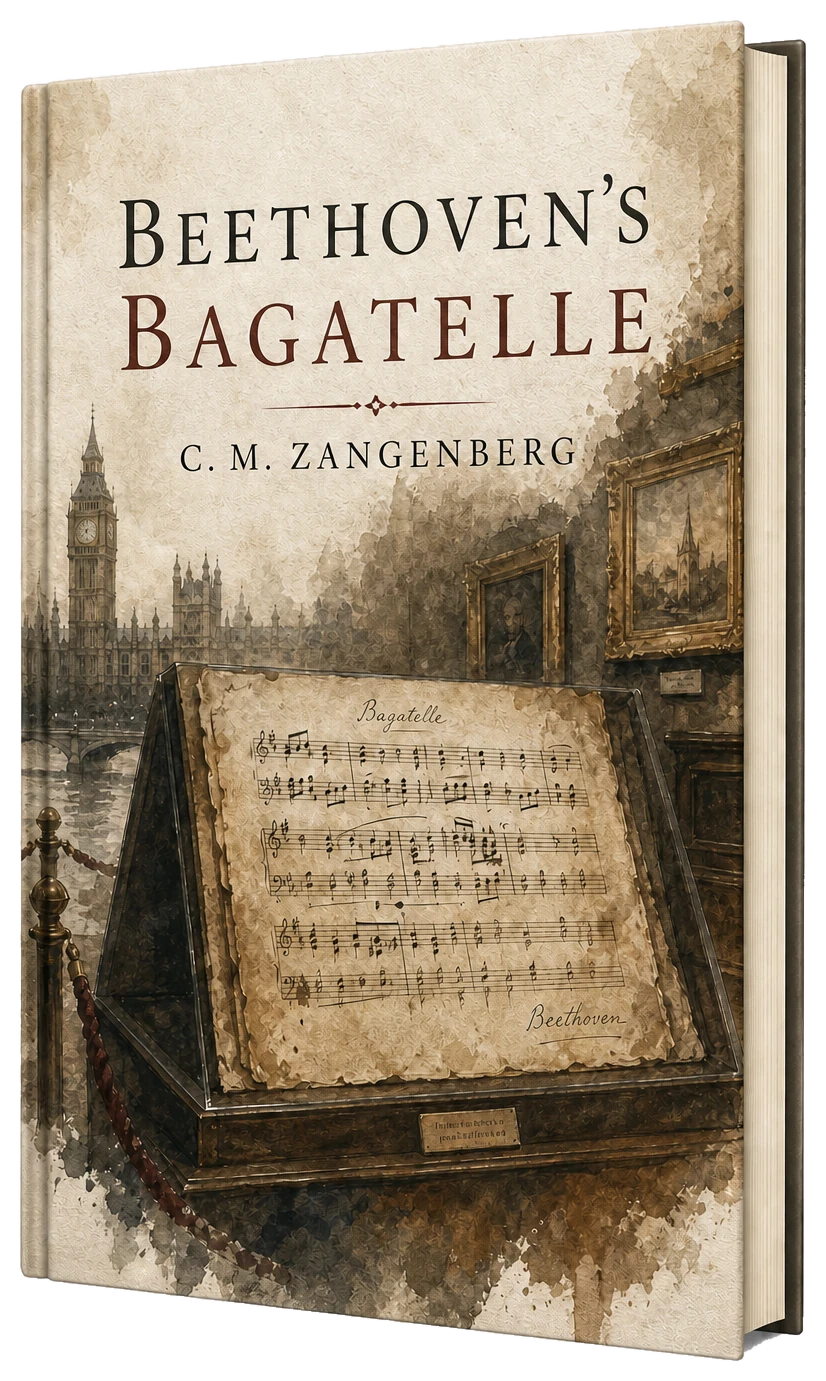
A lost Beethoven manuscript.
A dead man.
A secret that has waited
two hundred years to be found.
When a long-lost Beethoven manuscript is stolen from a London gallery, disgraced antiques dealer Kingsley Mills is reluctantly drawn back into a world he thought he’d left behind—alongside Detective Sergeant Marnie Morrison, the woman whose investigation ended his career.
As the hunt for the manuscript deepens, a two-hundred-year-old Habsburg secret emerges—and people with everything to lose will do anything to keep it buried.
For Mills, there are easier ways to earn a living. Unfortunately, none of them are nearly as interesting.
Get book updatesBuying and Goodreads links coming soon.

Antiques dealer.
Formerly.
Cynical, self-deprecating and brilliantly knowledgeable about art, provenance and people. Mills would usually rather be anywhere else.

Metropolitan Police.
Art historian.
Sharp, determined and intelligent. One of the officers who ruined Mills’s career—and the person he trusts least. Professionally, at least.

Dealer. Collector.
Very successful.
Immaculate, charming and dangerously ambitious. His purchase of the manuscript puts him at the centre of a deadly game.

Scholar. Museum director.
Antiquarian.
A leading authority on Beethoven and European collections. Cultured, urbane and possibly hiding more than he admits.

Businessman.
Among other things.
Wealthy, polite and persuasive. Represents GAZ, a Bulgarian organisation with interests that extend far beyond the art world.
The novel grows from the real uncertainty that surrounds musical manuscripts: versions copied by different hands, works catalogued long after their composition, private dedications, lost provenance and discoveries that can alter what scholars thought they knew.
A handwritten score can carry evidence in its paper, ink, corrections and ownership marks. Establishing who wrote it—and how it travelled—can become a detective story in its own right.
Beethoven’s Vienna was shaped by patrons, diplomats and aristocratic networks. Music moved through drawing rooms and private collections as readily as it did through public performance.
Archives preserve fragments, not complete lives. Gaps in a record leave room for competing claims, inconvenient discoveries and, in this case, murder.
History provides the mystery.
Fiction raises the stakes.
Stay up to date
Book updates and the occasional note from Kingsley Mills—reluctantly.